Tuesday, July 22, 2014

Understand the Israeli – Palestinian Apartheid In infographics

All the graphics are from the site Visualizing Palestine, a site dedicated to creating informative and impactful graphics about the occupied region. Check out many more of these images on their site

1. The Forced Exile of The Palestinian People 


2. Maintenance of the Occupation  

 
3. Continued Displacement and Destruction 


4. A Pattern of Violence and Aggression  


5. Illegal Detention  

 
 6, 7 & 8. Segregation of Resources


Info-graphic: Palestinian children killed by Israeli forces

Graphic: More children than Palestinian fighters are being killed in the offensive on Gaza. The name, age, sex and location of 132 of the 155 Palestinian children killed have been collected by the Al Mezan Centre for Human Rights


Thursday, September 13, 2012

What non-Muslim scholars said about Prophet Muhammed (peace be upon him)

What non-Muslim scholars said about Prophet Muhammed (peace be upon him)


Nepolean Bonaparte – Quoted in Christian Cherfils BONAPARTE ET ISLAM (PARIS  1914)

“I hope the time is not far off when I shall be able to unite all the wise and educated men of all the countries and establish a uniform regime based on the principles of Qur'an which alone are true and which alone can lead men to happiness.”

M.K.Gandhi, YOUNG INDIA, 1924

"...I became more than ever convinced that it was not the sword that won a place for Islam in those days in the scheme of life. It was the rigid simplicity, the utter self-effacement of the prophet, the scrupulous regard for his pledges, his intense devotion to his friends and followers, his intrepidity, his fearlessness, his absolute trust in God and his own mission. These, and not the sword carried everything before them and surmounted every trouble." YOUNG INDIA, 1924

Lamartine - Histoire de la Turquie, Paris 1854, Vol II, pp. 276-77:

"If greatness of purpose, smallness of means, and astounding results are the three criteria of human genius, who could dare to compare any great man in modern history with Muhammad? The most famous men created arms, laws and empires only. They founded, if anything at all, no more than material powers which often crumbled away before their eyes. This man moved not only armies, legislations, empires, peoples and dynasties, but millions of men in one-third of the then inhabited world; and more than that, he moved the altars, the gods, the religions, the ideas, the beliefs and souls... the forbearance in victory, his ambition, which was entirely devoted to one idea and in no manner striving for an empire; his endless prayers, his mystic conversations with God, his death and his triumph after death; all these attest not to an imposture but to a firm conviction which gave him the power to restore a dogma. This dogma was twofold, the unit of God and the immateriality of God; the former telling what God is, the latter telling what God is not; the one overthrowing false gods with the sword, the other starting an idea with words.
"Philosopher, orator, apostle, legislator, warrior, conqueror of ideas, restorer of rational dogmas, of a cult without images; the founder of twenty terrestrial empires and of one spiritual empire, that is Muhammad. As regards all standards by which human greatness may be measured, we may well ask, is there any man greater than he?"

Edward Gibbon and Simon Ocklay  - History of the Saracen Empire, London, 1870, p. 54:

"It is not the propagation but the permanency of his religion that deserves our wonder, the same pure and perfect impression which he engraved at Mecca and Medina is preserved, after the revolutions of twelve centuries by the Indian, the African and the Turkish proselytes of the Koran...The Mahometans have uniformly withstood the temptation of reducing the object of their faith and devotion to a level with the senses and imagination of man. 'I believe in One God and Mahomet the Apostle of God', is the simple and invariable profession of Islam. The intellectual image of the Deity has never been degraded by any visible idol; the honors of the prophet have never transgressed the measure of human virtue, and his living precepts have restrained the gratitude of his disciples within the bounds of reason and religion."

Rev. Bosworth Smith, Mohammed and Mohammadanism, London 1874, p. 92:

"He was Caesar and Pope in one; but he was Pope without Pope's pretensions, Caesar without the legions of Caesar: without a standing army, without a bodyguard, without a palace, without a fixed revenue; if ever any man had the right to say that he ruled by the right divine, it was Mohammed, for he had all the power without its instruments and without its supports."

Annie Besant, The Life and Teachings of Muhammad, Madras 1932, p. 4:

"It is impossible for anyone who studies the life and character of the great Prophet of Arabia, who knows how he taught and how he lived, to feel anything but reverence for that mighty Prophet, one of the great messengers of the Supreme. And although in what I put to you I shall say many things which may be familiar to many, yet I myself feel whenever I re-read them, a new way of admiration, a new sense of reverence for that mighty Arabian teacher."

Montgomery Watt, Mohammad at Mecca, Oxford 1953, p. 52:

"His readiness to undergo persecutions for his beliefs, the high moral character of the men who believed in him and looked up to him as leader, and the greatness of his ultimate achievement – all argue his fundamental integrity. To suppose Muhammad an impostor raises more problems than it solves. Moreover, none of the great figures of history is so poorly appreciated in the West as Muhammad."

James A. Michener, 'Islam: The Misunderstood Religion' in Reader's Digest (American Edition), May 1955, pp. 68-70:

"Muhammad, the inspired man who founded Islam, was born about A.D. 570 into an Arabian tribe that worshipped idols. Orphaned at birth, he was always particularly solicitous of the poor and needy, the widow and the orphan, the slave and the downtrodden. At twenty he was already a successful businessman, and soon became director of camel caravans for a wealthy widow. When he reached twenty-five, his employer, recognizing his merit, proposed marriage. Even though she was fifteen years older, he married her, and as long as she lived, remained a devoted husband.
"Like almost every major prophet before him, Muhammad fought shy of serving as the transmitter of God's word, sensing his own inadequacy. But the angel commanded 'Read'. So far as we know, Muhammad was unable to read or write, but he began to dictate those inspired words which would soon revolutionize a large segment of the earth: "There is one God."
"In all things Muhammad was profoundly practical. When his beloved son Ibrahim died, an eclipse occurred, and rumors of God's personal condolence quickly arose. Whereupon Muhammad is said to have announced, 'An eclipse is a phenomenon of nature. It is foolish to attribute such things to the death or birth of a human-being.'
"At Muhammad's own death an attempt was made to deify him, but the man who was to become his administrative successor killed the hysteria with one of the noblest speeches in religious history: 'If there are any among you who worshipped Muhammad, he is dead. But if it is God you worshipped, He lives forever.'"

Michael H. Hart, The 100: A Ranking of the Most Influential Persons in History, New York: Hart Publishing Company, Inc. 1978, p. 33:

"My choice of Muhammad to lead the list of the world's most influential persons may surprise some readers and may be questioned by others, but he was the only man in history who was supremely successful on both the religious and secular level."

Sarojini Naidu, the famous Indian poetess says – S. Naidu, Ideals of Islam, Speeches and Writings, Madaras, 1918

“It was the first religion that preached and practiced democracy; for, in the mosque, when the call for prayer is sounded and worshippers are gathered together, the democracy of Islam is embodied five times a day when the peasant and king kneel side by side and proclaim: 'God Alone is Great'... “

Thomas Caryle – Heros and Heros Worship

“how one man single-handedly, could weld warring tribes and Bedouins into a most powerful and civilized nation in less than two decades?”
“…The lies (Western slander) which well-meaning zeal has heaped round this man (Muhammed) are disgraceful to ourselves only…How one man single-handedly, could weld warring tribes and wandering Bedouins into a most powerful and civilized nation in less than two decades….A silent great soul, one of that who cannot but be earnest. He was to kindle the world; the world’s Maker had ordered so."

Stanley Lane-Poole – Table Talk of the Prophet

“He was the most faithful protector of those he protected, the sweetest and most agreeable in conversation. Those who saw him were suddenly filled with reverence; those who came near him loved him; they who described him would say, "I have never seen his like either before or after." He was of great taciturnity, but when he spoke it was with emphasis and deliberation, and no one could forget what he said...”

George Bernard Shaw - The Genuine Islam Vol.No.8, 1936.

“I believe if a man like him were to assume the dictatorship of the modern world he would succeed in solving its problems in a way that would bring much needed peace and happiness.
I have studied him - the man and in my opinion is far from being an anti–Christ. He must be called the Savior of Humanity.
I have prophesied about the faith of Mohammad that it would be acceptable the Europe of tomorrow as it is beginning to be acceptable to the Europe of today.”

Monday, November 28, 2011

ISPR’s documentary wins Eserciti-e-Popoli award

Inter Services Public Relations Relations documentary has won the first prize in the recently held International Film Festival "Eserciti-e-Popoli" (Army and People) held at Bracciano, Rome (Italy). The festival saw the participation of NATO and 24 Countries with 60 Films grouped into several categories: from ‘Institutional training information, from environmental protection to the humanitarian mission for peace. The films, produced by renowned film makers were evaluated by the international highly qualified and experienced jury.


Maintaining the tradition, Pakistan Army’s documentary "Glorious Resolve" received the Jury's Special award from the President of the Italian Senate with the citation "A technically outstanding and emotionally powerful dramatization of the story of the courageous soldiers under fire in a dire combat situation".. The award given by Gen. Giancarlo Fortuna, the President of the International Jury was received by a representative of the Pakistani Embassy in Roma.


Glorious Resolve was the joint venture of ISPR and Mindworks Media.Brigadier Syed Azmat Ali was the Executive Producer whereas Brig Syed Mujtaba Tirmizi was the Executive Director of the film. Lieutenant Colonel Irfan Aziz was the project director and the writer of this film which was amicably directed by Sarosh Kayani. Dr Hassan Waqas Rana of Mindworks Media was the producer whereas Bilal Lashari was the Director of Photography.


Based on a true operational account, Glorious Resolve highlights the epic of infantry soldiers, who fought against all odds even being heavily outnumbered when 1500 miscreants raided one of the section level outpost of an Infantry Battalion in South Waziristan Agency on the night of 29 May 2009. This documentary focuses not only on

the sacrifices and achievements of the Pakistan Army in War against Terrorism but also the Pakistan Army's glorious resolve to uproot the menace of terrorism from the land of the pure. It reenacts the sacrifice of jawans of 43 Punjab Regiment who laid their lives and the two Ghazis Sepoy Mashooq and Sepoy Muslim who held their positions till the reinforcements came.


ISPR’s Documentary that won Eserciti-e-Popoli award in flim festival held at Bracciano, Rome (Italy) – 27-11-2011 –

Photo ISPR

Saturday, April 23, 2011

Happy Birthday to Me

Thanks to everyone for the Phone calls/SMS/emails/IMs/Facebook messages wishing me Happy Birthday. I really appreciate all of them, it’s great to have such caring friends. It’s weird being 28 :)

I would like to thank each and everyone of you individually but I have received such an outpouring of generosity and love from you all my friends that it would take me a long time to personally thank everyone. I do not want any of you to wait for knowing how much I appreciate your kind thoughts and friendship so I hope you will accept this blog as my Thank You note until I can get to each one of you.

Tuesday, March 29, 2011

Pakistan vs India Semi Final Cricket World Cup 2011


India Vs Pakistan cricket matchs have always been the most controversial and tensed games. This time Pakistan will meet Indian team in semi finals.. No matter who wins, this year both teams have proved to be in the best of form, just by coming so far by beating all other teams. This is a very big match. This is a match of the century. No one can predict the winning team. I know Every one of us can`t wait to see the Sun Rise and begin the day of Wednesday. A historical day and A great opportunity for both nations.

Pakistan's captain Shahid Afridi and India's captain Mahendra Singh Dhoni in Mohali.


Monday, March 28, 2011

Sunday, February 20, 2011

Watch ICC Cricket World Cup 2011 Live

Watch ICC Cricket World Cup 2011 Live


Wait upto 1 minute to Watch Geo Super Live

11 sites where you can watch ICC Cricket World Cup 2011 Free Live Online Streaming


Note: We do not encourage to watch ICC World Cup 2011 online illegally. You should follow your countries Internet guidelines before attempting watch the channel online.

The list is taken from geniusgeeks.com

#1 Crictime.com: This is one of my favorite channel to watch cricket online for free. There are multiple servers available to world cup 2011 matches online for free..

#2 Webcric.com: Similar to above channel there are multiple streaming links available to watch world cup 2011 cricket matches live.

#3 Extracover.net: One of the good channel where you can also enjoy chatting with like minded people. If the above channels are not working for you then you can try this channel. There are multiple streaming link to ICC world cup 2011.

#4 Cricfire.com: You can watch highlights of ICC world cup 2011 from here. There are multiple links available to watch live cricket.

#5 Atdhe.net: One of the most trusted source for world cup live streaming links

#6 Freedocast.com: You can search here for ICC world cup 2011 live matches online. There are number of live streaming channels available to watch world cup 2011 live online for free.

#7 live-cricket-match.com: There are multiple links available here. They also stream live cricket on HD quality. If you are one of those looking for a quality links then this channel might come handy.

#8 Firstrow.net: World cup 2011 live streaming links will be available here.

#9 Ustream.tv: There will be multiple streaming links available once the match is live. One of the best source to watch ICC world cup 2011 live online for free. Search for your favorite channel from here.

#10 Justin.tv: Similar to above channel there are live streaming link to world cup cricket matches available. Search for the appropriate channel to watch ICC world cup 2011 live online for free.

#11 livecricket.bollym4u.com: Watch ICC cricket world cup 2011 online for free. All the matches will be shown here. There are multiple links available over here. Moreover you can also watch other sports matches here.

Not so free other ways to see the cricket event:

WILLOW.TV:If you are living in US, the best way to watch World cup 2011 Cricket live streaming is by using the service provided by Willow.TV. Though it is a premium service they offer unmatched cricket streaming in HD quality, and they even have mobile applications that let you watch live matches in almost all smartphone platforms. Willow. TV maintains agreements with ICC and other cricketing agencies for online streaming of World cup cricket 2011. Therefore, the service is legal in all supported countries. You can purchase a suitable cricket package from their website, willow.tv

World cup 2011 live streaming in mobile: Vodafone in India has come to an agreement with #ESPN#, and that will allow them to stream world cup 2011 live on mobile phones. This service will be available for all Vodafone customers with a 2G or 3G smartphone and a valid GPRS plan. Contact the customer care for more details.

ESPN Cricifo Mobile app: The popular Cricinfo Mobicast application has been redesigned to include several new features. Latest version will be known as ESPN Cricinfo and is already available for download at iOS app store. This app has features like push notifications, live cricket scores, ball-by-ball commentary, team ranking, news, video streaming, etc. Those who use other OS platforms can download it by going to ci.plusmo.com on their mobile browser.


Wednesday, August 11, 2010

Letter to President of Pakistan


Dear Mr. President,

It's quite pathetic and sad that I'm forced to call you that, because the vast majority of this nation as well as myself don't regard you as a President let alone a sane human being fit to live in this world. How you got to where you are now was the... most disgusting display of corruption and heartlessness I have ever seen in my entire life, and I thought rigging polls were bad enough; you killed your own wife! Was that the only way you could have taken over Pakistan? By emotionally blackmailing people to voting for you and your corrupt party? It's hilarious to see you trying to compare yourself to the likes of Zulfiqar Ali Bhutto or even Muhammad Ali Jinnah. You are in no way, shape or form even in the same universe as those people. As stuck up as Bhutto was, he did a lot for this nation and the youth responded to him. When he spoke of development and progress, they listened to him. When you speak, nobody gives a damn. Why? Because you're not really our President, you're just another guy who's filling up his Swiss Bank Account. Mister Ten Percent eh? More like Mister One Hundred Percent now. You promised us democracy, you failed. You promised us a stable economy, you failed. You promised us peace and security, you failed. You promised us a new age in politics, you failed. You promised to eradicate power outages, you failed. What good have you brought this nation? What Gunnah did the people of Pakistan commit to have you as the leader of this nation? Instead of doing what you promised, you have allowed American intelligence agencies to wreek havoc in Khyber Pakthunkhwa and now the rest of Pakistan sadly. And for what? So you can fill up your Swiss Bank Account with American dollars. How do you sleep every night? How do you sleep knowing that God is watching your every move? Do you have any shame? Don't you fear that one day what you have done you will be accountable for? I doesn't seem like it. I'm not criticizing you simply for the sake of it or because I belong to a rival party. Infact, all political parties in Pakistan are run by crooks and thieves be it Nawaz Sharif or any other. You all deserve to die...and die horrible deaths might I add. What I'm writing here is not only the sentiments of one person, but of an entire nation. Trust me on this one, you will pay for what you've done to Pakistan and if not in this life than in the next one surely. If you truly love Pakistan, which I honestly doubt you do, step down and admit to what you've done and what you are doing right now. But we all know it won't happen. You are not of that caliber as people like Quaid-e-Azam, Dr. Abdul Qadeer Khan, Allama Iqbal, Abdul Sattar Edhi and countless others who have earned there way into the hearts of everyone in Pakistan. If you have no intention to change and help Pakistan and the people of this great country, then people like you belong in prison. They should rot there until they die, so then they can burn in hell for eternity after that, because that's where you're going - Hell. I'd start packing some ice if I were you. Do humanity a favour. Step down and get lost.

Thank You,

From The People of Pakistan

P.S: Take you retarded EMO son Bilawal Zardari with you
Saturday, August 7, 2010

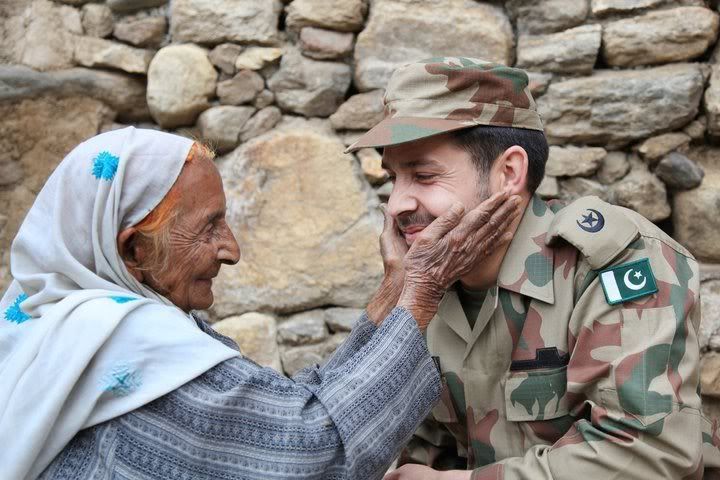
Reasons Why the Nation Loves Pakistan Army

Ask the flood victims. These soldiers are the saints, when they sing, “The saints are coming.”

Because each soldier of the Pakistan Army has a million proud mothers across the country to pray for his safety.
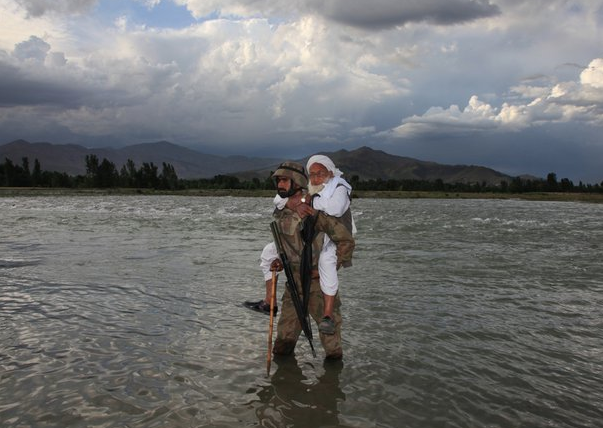
Because they are born to save.
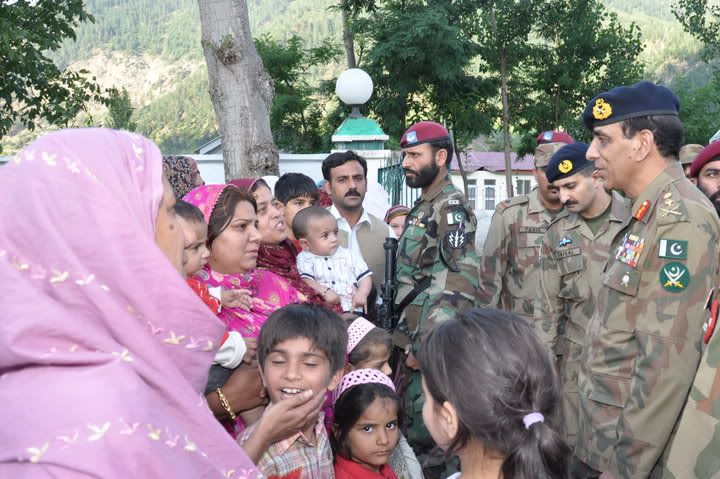
Because they get into the roots of the people to inquire their pains.

Because you look for a savior in them.
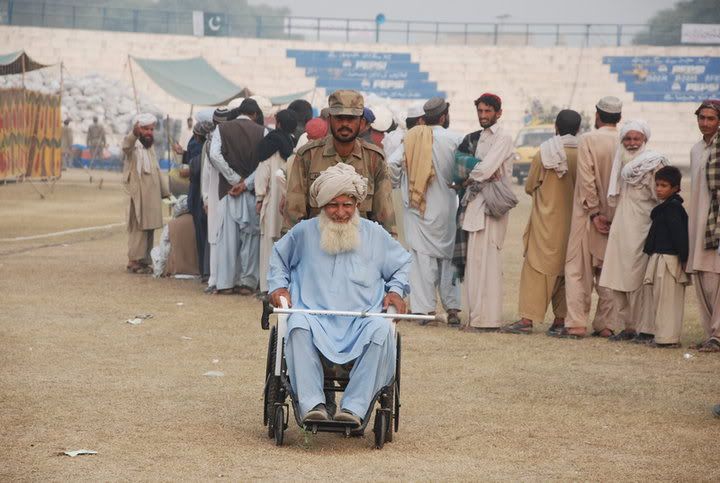
Because they know where their Heaven lies.
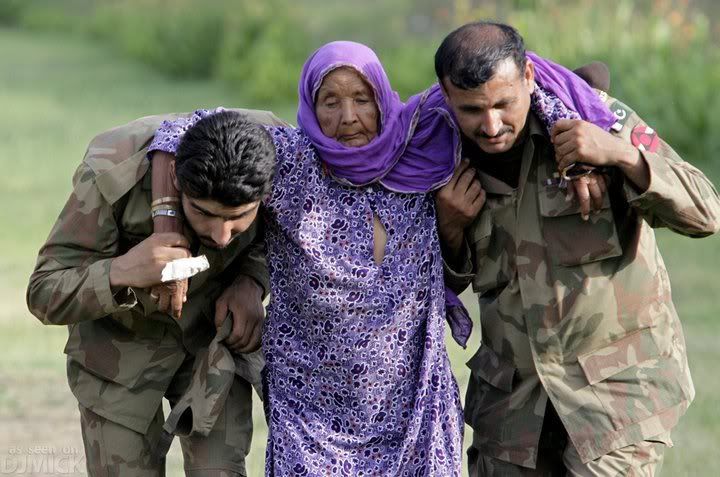
Because they’re the chosen ones – The messiah for the pariah.


Because they have so many other fronts to fight; Rescue, Code Red, Humanity are the only words they’ve known.

They are the ones who we believe in. They are the ones who teach us a life-code.

I salute each and every troop who constitutes the Pakistan Army. May Allah make you grow in stature, forever and always.


This blog post was prescribed through Pakistan Army’s twitter account and was also quoted by Defense.Pk authorities. *Photos provided by: Inter Services Public Relations – Pakistan.

Wednesday, July 14, 2010

I Remember

This poem is dedicated to my younger brother Fayez (Effi). He passed away at age 24.

I remember a time in youth
Brothers, best friends, together always.
Cricket, and football, - oh those were the days.

I remember, together as teens
The fighting and arguing and all in between
The laughing and joking till tears filled our eyes.

I remember those times each day I wake
Not understanding God's choice in who to take
A brother, a father a good man to all.

I remember our last time together
Sitting and talking well into the night
Together, your sickness we vowed to fight.

I remember you asking, ' Fazi are you sure'
Looking at you, our eyes filled with tears
' Effi you're my brother, - my blood is yours '.

I remember you brother always so strong
I pray every day, I hope you forgive me
I thought I could help you, I guess I was wrong.

Pain And Sorrow

This life is filled with pain and sorrow,
I always wonder if I'll make it through tomorrow.
I don't know what I'm going to do,
I'm always missing you.

I think about the joy, laughter, and tears,
and try not to have any fears.
I close my eyes and take a deep breath,
But once again I start thinking about your death.

You told me you would only be gone a little while,
And told me to always keep on a smile.
But its been longer than a while,
How do you expect me to smile?

I know you will always be in my heart,
But it is slowly breaking apart.
I always loved having you near,
and now I wish you were here.


In loving memory of my brother Fayez (Effi)'. 23-04-1984 to 04-07-2010
When you died, a part of my soul died with you.

Saturday, May 15, 2010

Mud Volcanoes of Balochistan

Pakistan's Balochistan province is gifted with a diverse landscape. Among many geological wonders here, one big attraction is the presence of 18 mud volcanoes. Infact world's largest and highest known mud volcano is located in Balochistan. The altitiude of highest mud volcano here is 300 ft. The mud volcanoes of Balochistan are not only located on the land but from time to time they appear as small temporary islands in the Arabian Sea also.

To reach the most famous group of these mud volcanoes, one has to travel west of Karachi on the Makran Coastal Highway (N10). One has to drive upto a place called Aghor located at the delta of Hungol River. 7 mud volcanoes are located few kilometers North East of Aghor. 11 mud volcanoes are located further west between Kutch and Gwadar.


There are two known groups of mud volcanoes here. One is called 'Chandargup' and other is called 'Jabl-ul-Ghurab'. Very close to Chandargup is an ancient Hindu temple called 'Hinglaj temple' or 'Nani Temple'. Due to close proximity of the mud volcano to a Hindu temple, it is very likely that the word Chandargup is actually derived from the word 'Chandargupt'. Another word which locally mentions this group of volcanoes is 'Chandra coop' which means Volcanoes of the Moon.

It is said that mud volcanoes have roots that go several kilometers underground and act as safety valves for high underground pressure.


The earliest account of the presence of mud volcanoes in Balochistan dates back to 1840. In 1862 Major (later Sir) Frederick John Goldsmid was employed by the Governer of Bombay for special missions. One such mission was a foray into Makran lasting from December 12, 1861 to January 1862. Goldsmid and his party commenced their journey overland from Karachi and wrote a diary of their travels upto Gwadar. This travelogue writes about the mud volcanoes, which gives the first detailed account of their existence. In his journal Goldsmid writes about passing through bubbling springs near Ras Koocheri, taking detours to see ancient Hindu temples of Hinglaj and the mud volcanoes near Ormara. The Hindus worship these mud volcanoes as the habitation of a deity Babhaknath.


It is reported that during the infamous 8.1 intensity earthquake of Balochistan which occured on May 31, 1935 a mud volcano erupted Northwest of Quetta, near the town of Surab and kept spewing out mud for 9 hours continuously.

It is also reported that on November 28, 1945 an earthquake of 7.8 intensity occured in Arabian Sea off the coast of Makran. The earthquake caused a tsunami with a wave reaching as high as 13m at some places. This tsunami killed 4000 people off the coast of Arabian Sea in Sindh and Baluchistan. Widespread destruction was reported in the towns of Pasni and Ormara.


A village called Khaddi got completely wiped off the face of earth with no survivors. Even in Karachi, waves rose several feet through Clifton and Gizri. Sea water entered the compounds of oil storage facilities at Kimari harbor in Karachi. The underwater cable link which existed in 1945 between Karachi and Muscat was interrupted. The Cape Monze lighthouse, 72 km from Karachi, was damaged. The quake was also strongly felt at Manora Island near Karachi Harbour. The 94–feet–high lighthouse on Manora was damaged and a couple of pounds of mercury spilt.

This earthquake shook and vented the mud volcanoes of Hungol so much that the gases coming out of this volcanoes got ignited and flames rose several hundred feet in the air.


The news of fiery volcanoes erupting in Balochistan (1945) spread across India. There were also reports from RAF aircraft flying in from the west of volcanic eruptions in Lasbela State in Balochistan. So one Peter Martin–Kaye who was stationed at Korangi Creek Royal Air Force Flying Boat base and his friend Peter Woolf, who was also stationed at the Korangi Creek base, took two weeks leave from the base commander and set off on the 2nd of December, 1945 on an expedition along the Makran Coast on camels provided by the Wazir of Lasbela State to check out what had happened when the earthquake and tsunami struck. On reaching the location of three active mud volcanoes (which they called Chandragup, Ranagup and Rajagup), concluded that the quake had released a quantity of gas at that location which had ignited in a fiery eruption giving rise to the stories of volcanic eruptions.


Another account of these eruption come from V.P. Sondhi, who in 1947 also wrote in about the same volcanic phenomenon in the area near the mouth of the Hungol River in Baluchistan following the 1945 quake. According to Sondhi, the self-igniting plume of gas had erupted:
“with such great force that the flames leaped thousands of feet high into the sky”.

V.P. Sondhi also documented the emergence of three mud volcano islands in the Arabian Sea just off the coast of Makran. These off shore mud volcanoes didn't live long and the strong wave action of Arabian Sea dissolved the muddy islands within months. By the end of 1946 these mud volcanoes were completely gone.

The geological research says that the mud volcanoes emerging out of Arabian Sea are made from highly viscous mud with high gas content. The mud gets driven up by high buoyancy forces and over time, a high mud ridge or mountain forms out of the water.

A scientist named G. Delisle had described in 2002 the emergence of a new mud volcano island in March 1999 at about the same place, this time apparently not accompanied by an earthquake, but it was also destroyed by wave action a few months later.


Mud volcanoes are generally not considered to be dangerous. In some countries like Azerbaijan which has the largest concentration of mud volcanoes in the world, the gas eruptions from mud volcanoes are more frequent and violent than those in Pakistan, they are actually a tourist attraction. Should Pakistan do the same?

With the opening of N10 - Makran Coastal Highway in 2004, mud volcanoes of Balochistan are now within few hours reach from Karachi. The convenience of a world class highway is also bringing a constant stream of 'city slickers' to this once remote area. People are now climbing onto these sandy volcanoes in large numbers. Some preservation should be provided to these natural wonders otherwise the onslaught of tourist will deface the natural beauty.

Tourism should be allowed but within safe distance of these sandy monuments. I also recommend a visit to these volcanoes and not to mention the joy of travel on scenic Coastal Highway, which deserves a full post on its scenic route alone.

COURTESY TO OWAIS MUGHAL

Wednesday, April 28, 2010

India-Pakistan Comparison 2010

Dr. Ishrat Husain, a former World Bank senior official and an ex governor of the State Bank of Pakistan, wrote an article captioned "India, Pakistan: a comparison" at the end of the first five decades of two nations' existence as independent states. To my knowledge, Dr. Hussain has not done an update of his article since it was first published. Although about three years too late, this post is my attempt to present a comparison of the two South Asian nations after sixty years of independence.

Here is the opening paragraph from Dr. Husain's article from the late 1990s, which I believe still stands true today:

"India and Pakistan are completing five decades of their independence. Since the partition, the relationship between the two countries has been uneasy and characterized by a set of paradoxes. There is a mixture of love and hate, a tinge of envy and admiration, bouts of paranoia and longing for cooperation, and a fierce rivalry but a sense of proximity, too. The heavy emotional overtones have made it difficult to sift the facts from the myths and make an objective assessment. There are in fact only two extreme types of reactions on each side. Either there are those who always find that the grass is greener on the other side of the pasture or those who are totally dismissive of the accomplishments of the other side."

Not much has changed in the last ten years as far as the above paragraph is concerned. The relationship between the two nations remains as emotionally charged as ever.

Then Dr. Husain's essay talked about what he saw as the common successes of the two nations in the first fifty years:

1. Despite the prophets of gloom and doom on both sides of the fence, both India and Pakistan have succeeded in more than doubling their per capita incomes. This is a remarkable feat considering that the population has increased fourfold in case of Pakistan and threefold in India. Leaving aside the countries in East Asia and China, very few large countries have been able to reach this milestone.

2. The incidence of poverty (defined as $1 per day) has also been reduced significantly although the number of absolute poor remains astoundingly high. However, the level of poverty is lower in Pakistan.

3. Food production has not only kept pace with the rise in population but has surpassed it. Both countries, leaving aside annual fluctuations due to weather conditions, are self-sufficient in food. (Pakistan exports its surplus rice but imports small volumes of wheat).

4. Food self-sufficiency has been accompanied by improved nutritional status. Daily caloric and protein intake per capita has risen by almost one-third but malnourishment among children is still high.

5. The cracks in the dualistic nature of the economy -- a well-developed modern sector and a backward traditional sector -- are appearing fast in both the countries. A buoyant middle class is emerging. The use of modern inputs and mechanization of agriculture has been a leveling influence in this direction. But public policies have not always been consistent or supportive.


Here is the update to the above assessment:

1. Per capita incomes in both nations have more than doubled in the last ten years, in spite of significant increases in population. The most recent and detailed real per capita income data was calculated and reported by Asian Development Bank based on a detailed study of a list of around 800 household and nonhousehold products in 2005 and early 2006 to compare real purchasing power for ADB's trans-national income comparison program (ICP). The ABD ICP concluded that Pakistan had the highest per capita income at HK$ 13,528 (US $1,745) among the largest nations in South Asia. ADB reported India’s per capita as HK $12,090 (US $1,560). Nominal per capita GDP estimates for Pakistan range from US $1000 to US $1022, while the range for India is from US $ 1017 to US $ 1100. Purchasing power parity (PPP) per capita GDP estimates for Pakistan from various sources range from $2500 to $2644, while the same sources put the range for India's per capita GDP from $2780 to $2972.

2. The incidence of poverty (defined as $1.25 per day) has also come down in both nations, although the number of poor in South Asia still remains very high. According to the 2009 UN Human and Income Poverty Report, the people living under $1.25 a day in India is 41.6 percent, about twice as much as Pakistan's 22.6 percent. The most recent estimates by UNDP in Pakistan for 2007-2008 indicate poverty level at 17.2%.

3. Food production has barely kept pace with the rise of population, particularly in Pakistan. There have been higher food prices and shortages of various commodities such as wheat and sugar. There is widespread hunger and malnutrition in all parts of India. India ranks 66th on the 2008 Global Hunger Index of 88 countries while Pakistan is slightly better at 61 and Bangladesh slightly worse at 70. The first India State Hunger Index (Ishi) report in 2008 found that Madhya Pradesh had the most severe level of hunger in India, comparable to Chad and Ethiopia. Four states — Punjab, Kerala, Haryana and Assam — fell in the 'serious' category. "Affluent" Gujarat, 13th on the Indian list is below Haiti, ranked 69. The authors said India's poor performance was primarily due to its relatively high levels of child malnutrition and under-nourishment resulting from calorie deficient diets.


4. Though the nutritional status has improved in both nations, there are still very high levels of malnutrition, particularly among children. In spite of the fact that there is about 22% malnutrition in Pakistan and the child malnutrition being much higher at 40% (versus India's 46%), the average per capita calorie intake of about 2500 calories is within normal range. But the nutritional balance necessary for good health appears to be lacking in Pakistanis' dietary habits. Senior Indian official Syeda Hameed has acknowledged that Pakistan and Bangladesh have done better than India in meeting the nutritional needs of their populations.

5. India's economy has grown more rapidly than Pakistan's in the last ten years. However, both nations have accepted and implemented significant economic reforms that have opened up their economies and brought about rapid growth, more than doubling the size of each economy in the last ten years.

Dr. Husain's paper went on to talk about the common failures of the two countries in their first fifty years as follows:

The relatively inward-looking economic policies and high protection to domestic industry did not allow them to reap the benefits of integration with the fast-expanding and much larger world economy. This has changed particularly since 1991 but the control mind-set of the politicians and the bureaucrats has not changed. The centrally planned allocation of resources and "license raj" has given rise to an inefficient private sector that thrive more on contacts, bribes, loans from public financial institutions, lobbying, tax evasion and rent-seeking rather than on competitive behavior. Unless both the control mind-set of the government and the parasitic behavior of the private industrial entrepreneurs do not change drastically, the potential of an efficient economy would be hard to achieve. This can be accomplished by promoting domestic and international competition, reducing tariff and non-tariff barriers and removing constraints to entry for newcomers.

The weaknesses in governance in the legal and judicial system, poor enforcement of private property rights and contracts, preponderance of discretionary government rules and regulations and lack of transparency in decision making act as brakes on broad-based participation and sharing of benefits by the majority of the population.

In terms of fiscal management, the record of both the countries is less than stellar. Higher fiscal deficits averaging 7-8 percent of GDP have persisted for fairly long periods of time and crowded out private capital formation through large domestic borrowing. Defense expenditures and internal debt servicing continue to pre-empt large proportion of tax revenues with adverse consequences for maintenance and expansion of physical infrastructure, basic social services and other essential services that only the government can provide. The congested urban services such as water, electricity, transport in both countries are a potential source of social upheaval.

The state of financial sector in both countries is plagued with serious ills. The nationalization of commercial banking services, the neglect of credit quality in allocation decisions, lack of competition and inadequate prudential regulations and supervision have put the system under severe pressure and increased the share of non-performing assets in the banks’ portfolio. The financial intermediation role in mobilizing and efficiently allocating domestic savings has been seriously compromised and the banking system is fragile. Both countries are now taking steps to liberalize the financial sector and open it up to competition from foreign banks as well as private banks.


Here is the update on the areas of common failures of India and Pakistan:

Though the level of globalization of the two nations remains well below China's, both India and Pakistan have made significant strides in this direction. In Pakistan, exports account for less than 15% of gross domestic product, compared with about 25% in India and 40% in China, according former Musharraf economic adviser Salman Shah. The policy changes in both nations have also opened up greater FDI inflows, though Pakistan's FDI has declined in the last two years due to security perceptions, after several years of strong FDI inflows, particularly in banking, telecommunications, real estate and oil and gas sectors.

Both countries continue to run large budget deficits. India's fiscal deficit for 2008-2009 stood at 6.5 percent of gdp and it is rising, according to Bloomberg. Pakistan has said its fiscal deficit will widen to as much as 4.9% of gross domestic product in 2009-2010, according to the Wall Street Journal.

The banking sectors in both nations have seen major improvements in delivery of new services. India and Pakistan have ranked 31 and 34 respectively, out of 52 countries in the World Economic Forum's first Financial Development Report. Both nations are ranked ahead of the Russian Federation (35), Indonesia (38), Turkey (39), Poland (41), Brazil (40), Philippines (48) and Kazakhstan (45).

Consumer and commercial credit availability and retail services have improved in the last ten years. Microfinance sectors are now well established in South Asia, helping fight poverty, and empowering women economically.

Both nations are suffering from poor governance resulting in lack of responsiveness to the basic needs of the vast majority of their people. In fact, the latest Human Development Report for 2009 shows that both major South Asian nations have slipped further down relative to other regions of the world. Pakistan's HDI ranking dropped 3 places from 138 last year to 141 this year, and India slipped six places from 128 in 2008 to 134 this year.

The level of urbanization in Pakistan is now the highest in South Asia, and its urban population is likely to equal its rural population by 2030, according to a report titled ‘Life in the City: Pakistan in Focus’, released by the United Nations Population Fund. Pakistan ranks 163 and India at 174 on a list of over 200 countries compiled by Nationmaster. The urban population now contributes about three quarters of Pakistan's gross domestic product and almost all of the government revenue. The industrial sector contributes over 27% of the GDP, higher than the 19% contributed by agriculture, with services accounting for the rest of the GDP.

The increasing urbanization has had the effect of defusing the "population bomb" in Pakistan. With increasing urbanization, Pakistan's population growth rate has declined from 2.17% in 2000 to 1.9% in 2008. Based on PAI Research Commentary by Karen Hardee and Elizabeth Leahy, the total fertility rate (TFR) in Pakistan is still the highest in South Asia at 4.1 children per woman. Women in urban areas have an average of 3.3 children compared to their rural counterparts, who have an average of 4.5 children. The overall fertility rate has been cut in half from about 8 children per woman in 1960s to about 4 this decade, according to a study published in 2009.

Third, Dr. Husain turned his attention to the areas where India surpassed Pakistan:

There is little doubt that the scientific and technological manpower and research and development institutions in India are far superior and can match those of the western institutions. The real breakthrough in the Indian export of software after the opening up of the economy in 1991 attests to the validity of the proposition that human capital formation accompanied by market-friendly economic policies can lift the developing countries out of low-level equilibrium trap.

Indian scientists working in India excel in the areas of defense technology, space research, electronics and avionics, genetics, telecommunications, etc. The number of Ph.Ds produced by India in science and engineering every year -- about 5,000 -- is higher than the entire stock of Ph.Ds in Pakistan. The premier research institutions in Pakistan started about the same time as India have become hotbed of internal bickerings and rivalries rather than generator of ideas, processes and products.

Related to this superior performance in the field of scientific research and technological development is the better record of investment in education by India. The adult literacy rate, female literacy rate, gross enrollment ratios at all levels, and education index of India have moved way ahead of Pakistan. Rapid decline in total fertility rates in India has reduced population growth rate to 1.8 percent compared to 3.0 percent for Pakistan.

Health access to the population and infant mortality rates are also better in India and thus the overall picture of social indicators, although not very impressive by international standards, emerges more favorable. The two most important determinants of Pakistan’s dismal performance in social development are its inability to control population growth and the lack of willingness to educate girls in the rural areas.


Here's the update on areas where India was ahead of Pakistan ten years ago:

In response to the growing concerns about the nation lagging in higher education achievement, Pakistan launched Higher Education Reform led by Dr. Ata ur Rahman, adviser to President Musharraf in 2002. This reform resulted in over fivefold increase in public funding for universities, with a special emphasis on science, technology and engineering. The reform supported initiatives such as a free national digital library and high-speed Internet access for universities as well as new scholarships enabling more than 2,000 students to study abroad for PhDs — with incentives to return to Pakistan afterward. The years of reform have coincided with increases in the number of Pakistani authors publishing in research journals, especially in mathematics and engineering, as well as boosting the impact of their research outside Pakistan.


Although India has about 270 million illiterate adults, India's overall literacy rate is better than Pakistan's. Pakistan's population of illiterate adults is estimated at 47 million, fourth largest after India's 270 million, China's 71 million, Bangladesh's 49 million, according to the latest UNESCO Education For All report for 2010.

But India remains significantly ahead of Pakistan in higher education, with six universities, mostly IITs, ranked among the top 400 universities of the world versus only one from Pakistan, National University of Science and Technology(NUST) ranked at 350, up from 375 last year. Replication of NUST campuses, like the IIT campuses in India, can help spawn more highly rated institutions of higher learning near major cities in Pakistan.

Pakistan's information technology industry is quite young. It is in very early stages of development compared to the much older and bigger Indian IT industry, which had a significant headstart of at least a decade over Pakistan. During the lost decade of the 1990s under Bhutto and Sharif governments, Pakistani economy stagnated and its IT industry did not make any headway. However, the industry has grown at 40% CAGR during the 2001-2007, and it is estimated at $2.8 billion as of last year, with about half of it coming from exports. This pales in comparison to over $5 billion revenue a year reported by India's Tata Consulting alone.

India's literacy rate of 61% is well ahead of Pakistan's 50% rate. In higher education, six Indian universities have made the list of the top 400 universities published by Times Higher Education Supplement this year. Only one Pakistani university was considered worthy of such honor.

Pakistan has consistently scored lower on the HDI sub-index on education than its overall HDI index. It is obvious from the UNDP report and other sources that Pakistan's dismal record in enrolling and educating its young people, particularly girls, stands in the way of any significant positive development in the nation. The recent announcement of a new education policy that calls for more than doubling the education spending from about 3% to 7% of GDP is a step in the right direction. However, money alone will not solve the deep-seated problems of poor access to education, rampant corruption and the ghost schools that only exist on paper, that have simply lined the pockets of corrupt politicians and officials. Any additional money allocated must be part of a broader push for transparent and effective delivery of useful education to save the people from the curses of poverty, ignorance and extremism which are seriously hurting the nation.

A basic indicator of healthcare is access to physicians. There are 80 doctors per 100,000 population in Pakistan versus 60 in India, according to the World Health Organization. For comparison with the developed world, the US and Europe have over 250 physicians per 100,000 people. UNDP recently reported that life expectancy at birth in Pakistan is 66.2 years versus India's 63.4 years.

Access to healhcare in South Asia, particularly due to the wide gender gap, presents a huge challenge, and it requires greater focus to ensure improvement in human resources. Though the life expectancy has increased to 66.2 years in Pakistan and 63.4 years in India, it is still low relative to the rest of the world. The infant mortality rate remains stubbornly high, particular in Pakistan, though it has come down down from 76 per 1000 live births in 2003 to 65 in 2009. With 320 mothers dying per 100,000 live births in Pakistan and 450 in India, the maternal mortality rate in South Asia is very high, according to UNICEF.

Finally, Dr. Hussain addressed areas where he thought Pakistan was ahead of India fifty years after independence as follows:

The economic growth rate of Pakistan has been consistently higher than India. Starting from almost the same level or slightly lower level in 1947, Pakistan’s per capita income today in US nominal dollar terms is one-third higher (430 versus 320) and in purchasing parity dollar terms is two-third higher (2,310 versus 1,280). The latter suggests that the average Pakistani has enjoyed better living standards and consumption levels in the past but the gap may be narrowing since early 1990s. Had the population growth rate in Pakistan been slower and equaled that of India, this gap would have been much wider and the per capita income in Pakistan today would have been twice as high and the incidence of poverty further down.

Although both India and Pakistan have pursued inward-looking strategies, the anti-export bias in case of Pakistan has been comparably lower and the integration with the world market faster. The trade-GDP ratio in PPP terms is twice that of all South Asian countries. Pakistan’s export growth has been stronger and the composition of exports has shifted from primary to manufactured goods; albeit the dominance of cotton-based products has enhanced its vulnerability.

Domestic investment rates in Pakistan have remained much below those of India over the entire span primarily due to the relatively higher domestic savings rates in the latter. But the efficiency of investment as measured by the aggregate incremental capital-output ratio or total factor productivity has been higher in case of Pakistan and, to some extent, compensated the lower quantity of investment.


Here's the update on the above assessment:

Although Pakistan's economy has more than doubled in the last decade, the nation's economic growth has been slower than India's since the 1990s. Since 2008, Pakistan's economy has, in the words of the Economist, returned to the "bad old days" of the lost decade of 1990s. According to Economic Survey 2008-09, presented by Finance Minister Shaukat Tarin, Pakistan's economy grew by a mere 2.0 percent, barely keeping pace with population growth. The growth fell significantly short of the 4.5 percent target for the year, which was already very modest compared with an average of 7% economic growth witnessed from 2001-2008.

While it lags behind China, India now exports a larger percentage of its GDP than Pakistan. In Pakistan, exports account for less than 15% of gross domestic product, compared with about 25% in India and 40% in China, according former Musharraf economic adviser Salman Shah.

At 30% of GDP, Indians continue to save twice as much as Pakistanis who save about 15%. Indians' private savings provide a much larger pool for domestic investments than the much smaller private savings in Pakistan.

Let me conclude with an excerpt from a British writer William Dalrymple's article, published on 14 August, 2007 in The Guardian:

"On the ground, of course, the reality is different and first-time visitors to Pakistan are almost always surprised by the country's visible prosperity. There is far less poverty on show in Pakistan than in India, fewer beggars, and much less desperation. In many ways the infrastructure of Pakistan is much more advanced: there are better roads and airports, and more reliable electricity. Middle-class Pakistani houses are often bigger and better appointed than their equivalents in India.

Moreover, the Pakistani economy is undergoing a construction and consumer boom similar to India's, with growth rates of 7%, and what is currently the fastest-rising stock market in Asia. You can see the effects everywhere: in new shopping centers and restaurant complexes, in the hoardings for the latest laptops and iPods, in the cranes and building sites, in the endless stores selling mobile phones: in 2003 the country had fewer than three million cellphone users; today there are almost 50 million."


A familiar yardstick often used to measure progress of a nation is its energy consumption. Per capita energy consumption in Pakistan is estimated at 14.2 million Btu, which is much higher than Bangladesh's 5 million BTUs per capita but slightly less than India's 15.9 million BTU per capita energy consumption. However, South Asia's per capita energy consumption is only a fraction of other industrializing economies in Asia region such as China (56.2 million BTU), Thailand (58 million BTU) and Malaysia (104 million BTU), according to the US Dept of Energy 2006 report. To put it in perspective, the world average per capita energy use is about 65 million BTUs and the average American consumes 352 million BTUs. With 40% of the Pakistani households that have yet to receive electricity, and only 18% of the households that have access to pipeline gas, the energy sector is expected to play a critical role in economic and social development. With this growth comes higher energy consumption and stronger pressures on the country’s energy resources. At present, natural gas and oil supply the bulk (80 percent) of Pakistan’s energy needs. However, the consumption of those energy sources vastly exceeds the supply. For instance, Pakistan currently produces only 18.3 percent of the oil it consumes, fostering a dependency on imports that places considerable strain on the country’s financial position. On the other hand, hydro and coal are perhaps underutilized today, as Pakistan has ample potential supplies of both.

Pakistan's KSE-100 stock index surged 55% in 2009, a year that also saw the South Asian nation wracked by increased violence and its state institutions described by various media talking heads as being on the verge of collapse. Even more surprising is the whopping 825% increase in KSE-100 from 1999 to 2009, which makes it a significantly better performer than the BRIC nations. BRIC darling China has actually underperformed its peers, rising only 150 percent compared with energy-rich Brazil (520 percent) and Russia (326 percent) or well-regulated India (274 percent), which some investors see as a safer and more diverse bet compared with the Chinese equity market, which is dominated by bank stocks.


Summary:

Goldman Sachs report on "BRIC" and "Next 11" projects that India will be the fourth largest economy in the world by 2025. Goldman also forecasts Pakistan's rank moving up from the 26th largest now to the 18th largest economy in the world by 2025. If the deteriorating security situation and current economic slump in Pakistan are not contained and managed properly, there is a strong chance that Pakistan would be left significantly behind India at the time of the next update of this comparison in 2020. However, Pakistan is just too big to fail. In spite of all of the serious problems it faces today, I remain optimistic that country will not only survive but thrive in the coming decades. With a fairly large educated urban middle class, vibrant media, active civil society, assertive judiciary, many philanthropic organizations, and a spirit of entrepreneurship, the nation has the necessary ingredients to overcome its current difficulties to build a strong economy with a democratic government accountable to its people.

Here are some more recent comparative indicators:

One out of every three illiterate adults in the world is an Indian, according to UNESCO. Pakistan stands fourth in the world in terms of illiterate adult population, after India, China and Bangladesh.

One out of very two hungry persons in the world is an Indian, according to World Food Program. Pakistan fares significantly better than India on the hunger front.

Poverty:

Population living under $1.25 a day - India: 41.6% Pakistan: 22.6% Source: UNDP

The reason for higher levels of poverty in India in spite of its rapid economic growth is the growing rich-poor disparity. Gini index measuring rich-poor gap for India is at 36, higher than Pakistan's 30. Gini index is defined as a ratio with values between 0 and 100: A low Gini index indicates more equal income or wealth distribution, while a high Gini index indicates more unequal distribution. Zero corresponds to perfect equality (everyone having exactly the same income) and 100 corresponds to perfect inequality (where one person has all the income, while everyone else has zero income).

Nutrition:

Underweight Children Under Five (in percent) Pakistan 38% India 46% Source: UNICEF

Health:

Life expectancy at birth (years), 2007 India: 63.4 Pakistan: 66.2 Source: HDR2009

Education:

Youth (15–24 years) literacy rate, 2000 to 2007, male Pakistan: 80% India 87% Source: UNICEF

Youth (15–24 years) literacy rate, 2000 to 2007, female Pakistan 60% India 77% Source: UNICEF

Economics:

GDP per capita (US$), 2008 Pak:$1000-1022 India $1017-1100

Child Protection:

Child marriage under 15-years ; 1998–2007*, total Pakistan - 32% India - 47% Source: UNICEF

Under-5 mortality rate per 1000 live births (2007), Value Pakistan - 90 India 72 Source: UNICEF

Here's a video clip of British Writer William Dalrymple comparing in India and Pakistan:


Here's another video clip from Intelligence Squared debate about Pakistan:


Here's recent video of Prof Jayati Ghosh of Nehru University debunking the myth of the "Indian Miracle":

Tuesday, April 20, 2010

Global Views of United States Improve While Other Countries Decline

Global views of the United States have improved markedly over the last year while views of many countries have become more negative, according to the latest BBC World Service poll across 28 countries. For the first time since the BBC started tracking in 2005, views of the United States’ influence in the world are now more positive than negative on average.

The survey, conducted by GlobeScan/PIPA among more than 29,000 adults, asked respondents to say whether they considered the influence of different countries in the world to be mostly positive or mostly negative. It found that the United States is viewed positively on balance in 20 of 28 countries, with an average of 46 per cent now saying it has a mostly positive influence in the world, while 34 per cent say it has a negative influence.

Compared to a year earlier, negative ratings of the United States have dropped a striking nine points on average across the countries surveyed both years, while positive ratings are up a more modest four points. Ratings of the influence of many other countries, meanwhile, have declined over the past year. On average, positive ratings of the United Kingdom and Japan are down three points, Canada down six points, and the European Union down four points. Ratings of the United Kingdom’s influence in the world declined significantly in 11 countries and rose in only three. (See note at foot of page two for details of how these tracking averages have been calculated)

Germany is the most favourably viewed nation (an average of 59% positive), followed by Japan (53%), the United Kingdom (52%), Canada (51%), and France (49%). The European Union is viewed positively by 53 per cent. In contrast, Iran is the least favourably viewed nation (15%), followed by Pakistan (16%), North Korea (17%), Israel (19%), and Russia (30%).

While it is not among the most favourably viewed nations, the improvement in the ratings of the United States means it has now overtaken China in terms of positive perceptions. Fifteen countries view China favourably on balance, with an average of 41 per cent feeling it has a mostly positive influence in the world and 38 per cent feeling its influence is mostly negative.

Iran attracts mostly negative views in all countries polled except Mexico and Pakistan—on average, 56 per cent rate it negatively. Views of Iran in China and Russia have deteriorated—positive views have dropped 11 points among the Chinese people (30%) while negative views of Iran have jumped up 13 points among Russians (to 45%).

The BBC World Service Poll has been tracking opinions about country influence in the world since 2005. The latest results are based on 29,977 in-home or telephone interviews conducted across a total of 28 countries by the international polling firm GlobeScan, together with the Program on International Policy Attitudes (PIPA) at the University of Maryland. GlobeScan coordinated fieldwork between 30 November 2009 and 16 February 2010.

GlobeScan Chairman Doug Miller comments: “People around the world today view the United States more positively than at any time since the second Iraq war. While still well below that of countries like Germany and the UK, the global standing of the US is clearly on the rise again.”

Steven Kull, director of PIPA, comments, “While China’s image is stuck in neutral, America has motored past it in the global soft-power competition.

After a year it appears the ‘Obama effect’ is real. Its influence on people’s views worldwide, though, is to soften the negative aspects of the United States’ image, while positive aspects are not yet coming into strong focus.”

Participating Countries


Note: In Azerbaijan, Brazil, Central America (Costa Rica, El Salvador, Guatemala, Honduras, Nicaragua, Panama), Chile, China, Egypt, Mexico, the Philippines, Thailand, and Turkey urban samples were used.

Note on the calculation of tracking averages

  • The year-on-year shift in average views of countries cited in paragraph 3 above is based on the views of the 23 countries in which these questions were asked both in 2009 and 2010. (Please see the methodology section for a full list of the countries surveyed in 2010 and 2009.)
  • All other average figures cited above represent the views across all 2 countries surveyed this year.
  • Where a country was asked to rate itself, these views have not been included in the average views cited here.


Detailed Findings

While positive views of the United States increased in most countries polled, the most significant increases were in Germany (up from 18% in 2009 to 39% this year), in Russia (up from 7% to 25%), in Portugal (up from 43% to 57%) and in Chile (up from 42% to 55%) with negative perceptions also falling significantly.

The only countries where perceptions of the United States became more negative overall were Turkey (where the proportion with positive perceptions of the United States fell from 21 per cent to 13 per cent and negative perceptions increased from 63 per cent to 70 per cent), and in India (where positive perceptions dipped from 43 per cent to 39 per cent and negative views increased from 20 to 28 per cent).

The only two countries to have majorities with negative views of the United States are Turkey (70%) and Pakistan (52%). Russia is also quite negative (50%).

Last year’s poll found that views of both Russia and China had deteriorated. Looking at the views of the countries polled in both 2009 and 2010, they appear to have stabilized somewhat this year. Views of Russia in particular are more muted, with a decline both in the proportion of those rating it positively (from 31 to 29%) and those rating it negatively (42 to 37%). China’s positive ratings remain at 40 per cent, while its negative ratings have fallen a little to 38 per cent.

European countries continue to have quite negative views of China, including Italy (72% negative), Germany (71%), France (64%), Spain and Portugal (both 54%) as do South Koreans (61%) and Americans (51%). In Africa, views are quite positive with majorities viewing it positively in Kenya and Nigeria (both 73%) and in Ghana (63%).

Views of the European Union remain mostly positive in almost all countries polled (53% overall). But there is a difference of views toward the European Union among the European nations surveyed, with Germany (76%) and France (74%) the most positive about its influence, Italy (64%) and Spain (62%) a little less favourable and the United Kingdom (54%) much less upbeat about it. Turkey—which is also highly negative about most other countries—also rates the European Union unfavourably (with only 29% positive).

In total 29,977 citizens in 28 countries, were interviewed face-to-face or by telephone between 30 November 2009 and 16 February 2010. Nations were rated by half samples in all countries polled. Polling was conducted for BBC World Service by the international polling firm GlobeScan and its research partners in each country. In ten of the 28 countries, the sample was limited to major urban areas. The margin of error per country ranges from +/-2.1 to 6.9 per cent, 19 times out of 20.

For more details, please visit GlobeScan.com or WorldPublicOpinion.org as well as the GlobeScan Insights blog.


Media Contacts

For media interviews with the participating pollsters, please contact:

Steven Kull, Director
Program on International Policy Attitudes, Washington
+1 202 232 7500
(Mobile: +1 301 254 7500)
skull@pipa.org

Oliver Martin, Director, Global Development
GlobeScan Incorporated, Toronto
+1 416 969 3073
(Mobile: +1 416 721 3544)
oliver.martin@globescan.com
Sam Mountford, Research Director
GlobeScan Incorporated, London
+44 20 7253 1447
(Mobile: +44 7854 132625)
sam.mountford@globescan.com

GlobeScan Incorporated is an international opinion research consultancy. We provide global organisations with evidence-based insight to help them set strategy and shape their communications. Companies, multilateral institutions, governments and NGOs trust GlobeScan for our unique expertise across reputation management, sustainability and stakeholder relations. GlobeScan conducts research in over 90 countries, is ISO 9001-2008 certified and a signatory to the UN Global Compact.

Established in 1987, GlobeScan is an independent, management-owned company with offices in Toronto, London, and San Francisco. www.GlobeScan.com.

The Program on International Policy Attitudes (PIPA) of the Center for International and Security Studies at the University of Maryland, undertakes research on attitudes in publics around the world on a variety of international issues and manages the international research project WorldPublicOpinion.org.

BBC World Service is an international multimedia broadcaster delivering international, national and regional services in 32 languages. It uses multiple platforms to reach its weekly audience of 188 million globally, including shortwave, AM, FM, digital satellite, and cable channels. It has around 2,000 partner radio stations which take BBC content, and numerous partnerships supplying content to mobile phones and other wireless handheld devices. Its news sites include audio and video content and offer opportunities to join the global debate. For more information, visit bbcworldservice.com. To find out more about the BBC’s English language offerings and subscribe to a free e-newsletter, visit bbcworldservice.com/schedules.